By: Dilini Pathirana
Introduction
Teaching and Researching International Law in Asia (TRILA) is a groundbreaking project. It provides a forum for scholars from Asia and around the world to engage in constructive dialogue on issues such as the development of curriculum, methods and materials for teaching international law in Asia and the promotion of a vibrant research culture in the region that fosters rigorous scholarship and high-quality publications. Such dialogues seek equipping Asian scholars, practitioners, diplomats and officials with the requisite skills, knowledge and expertise to develop a deep understanding of evolving dynamics of the international system, while empowering them “to engage with global debates and develop initiatives that enhance the international rule of law”. Their long-term aspiration is to change the modest role that Asia historically played in the “making of modern international law” by transforming the region into a leading force in the formation of international law and a prominent voice in shaping the international legal order. The project regards teaching and researching international law as the key drivers of this transformation. It thus places particular emphasis on identifying challenges facing Asian law teaching institutions and Asian legal scholars and addressing them in an “informed, coherent and collaborative manner”. This has enabled TRILA to evolve beyond the status of mere project, developing into “a community and a continuing tradition…committed to thoughtful, critical, and context-sensitive engagement with how international law is taught and researched across Asia and beyond.”
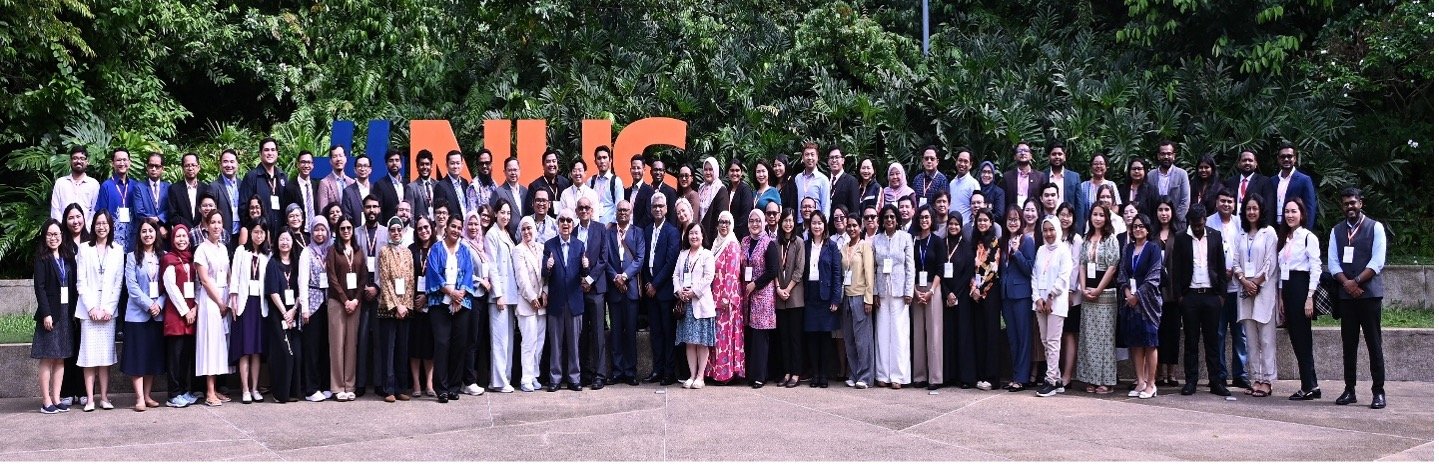
While marking the latest iteration of the project, TRILA Singapore Conference 2026 (the Conference) was held at the National University of Singapore. It brought together more than a hundred participants from different parts of Asia, contributing not only to the strengthening of existing networks of colleagues but also to the establishment of new scholarly connections and collaborations across the region. During the breakout sessions dedicated to the topic of researching international law in Asia, participants were given the opportunity to candidly reflect on the conditions under which they conduct legal research, openly share the challenges and constrains they encounter in the course of researching international law and critically explore emerging methodologies and trends in the field. I had the privilege of leading one such sessions, attended by more than twenty-five colleagues from different parts of the region, during which they engaged in a meaningful discussion, reflecting on key challenges generally involved in researching international law and several issues specific to researching international law based in Asia and by Asian scholars. This note provides an overview of these reflections with a view to shape ongoing efforts to address challenges, inform future discussions and encourage further initiatives relating to researching international law in Asia, drawing upon the foundation laid by TRILA.
Researching International Law: Intellectually Demanding and Methodologically Complex Task
Conducting scholarly research about law and legal systems is an intricate task which transcends mere searching for information and describing law applicable to a particular issue. International law research is uniquely challenging because the international system is shaped not only by legal rules but also by moral considerations, contextual realities, and the dynamics of power politics. Crisis narratives make researching in international law more politically germane and intellectually arduous. On one hand, crises have been depicted as “basic epistemic units” through which international law can be best understood because it is tested, adjusted and evolved through crises, whilst, on the other hand, recurrent crises have provoked the argument that international law is “in crisis”, compelling the classic State-centred international legal order to adapt to modern-day realties such as emerging multipolarity, increasing geopolitical gridlock, ongoing technological disruption and growing existential challenges for humanity. All these factors render international law a complex, contested and constantly evolving, as well as a fragmented and decentralized system which poses profound ontological and epistemological questions, making research in the discipline intellectually demanding and methodologically complex.
Some of the methodological complexities stem from the very nature of international law itself. Others are stem specifically from perplexities surrounding the methodology in international law; should it be viewed as selecting “a specific techniques of argumentation, persuasion and description” or as “a conversation about particular theoretical approaches to international law” or as an explanation and reflection on how researchers conduct research in practice. According to the latter outlook, methodology in international law is a flexible process that keeps evolving during project through the exercise of “research-writing” which is essentially shaped by the chosen “lens of interpretation”. Methodology in international law can be further understood as the manner in which researchers collect and organize information to answer underlying research question/s: descriptive, normative or critical or a combination of the three. Methodology in international law, thus, lacks a common or shared understanding within the discipline while it significantly differs from the social science methodology which basically aims at testing hypotheses and/or building theories through data collected using methods such as observations, interviews and surveys and analyzed using techniques such as descriptive, statistical and thematic analysis. By contrast, basic legal methods such as interpreting legal texts and analyzing cases and state practice primarily aim to develop logical and persuasive argument/s in light of the applicable primary and secondary resources.
Researching International Law based in Asia and by Asians: Structurally Challenging and Epistemically Difficult Task
Navigating this intellectually demanding task can be even harder for academics based in Asia due to several structural problems which create unequal research conditions or a tilted playing field within legal academia. It can be particularly harder to Asian early-career researchers due to epistemic barriers, notably less proficiency in English and less training in critical thinking.
To begin with, inadequate access to resources remains one of the main issues faced by academics affiliated to Asian law teaching institutions with limited funding. It may place certain projects beyond the reach of such academics, diminishing not only their ability but also their desire to embark on scholarly research on highly specialized themes in international law. With no or limited institutional subscriptions, they struggle with getting access to expensive academic journals and sophisticated databases and, are left with limited possible courses of actions. Most of them are compelled to rely mainly on freely available resources such as open-access works, preprints and obsolete databases and use them creatively for producing good scholarship. Relying on such materials alone, however, prevents most of Asia-based academics from engaging with recent developments related to the topic being researched, perhaps even missing key literature and different perspectives entirely. It could further result in structuring their research around widely circulated works and prevalent theories, reproducing popular narratives and espousing dominant perspectives, while leading to international legal discourses continuing to be dominated by a single voice, that is historically the Western voice.
Academics with limited or no access to resources are further required to effectively collaborate with other researchers in the field, sometimes contacting them directly to get access to certain scholarly works. This strategy, however, requires significant time and patience, yet its success depends on the willingness of other researchers to collaborate, at least through knowledge-sharing. At the same time, limited or no access to resource may delay the completion of research projects which, in turn, prevents such underfunded Asia-based academics from timely engaging with academic discussions and/or debates in international law, foregrounding their own insights and perspectives relating to the issue being deliberated. The lack of opportunities for Asia-based scholars to engage in such debates and/or contribute to the literature allows the continued dominance of Western voices in international legal discourses. Faculties affiliated to underfunded Asian law teaching institutions further suffer from absence or lack of funding to participate in conferences and/or workshops, which is vital not only to receive feedback on their works-in-progress but also to deal with limited mentorship and expertise at their home institutions. Limited mentorship is a major obstacle encountered by emerging Asian researchers who are compelled to adopt a trail-and-error approach to develop their research trajectory.
Most of Asian university faculties further lack institutionalized research assistant facility or other research supports which is crucial for faculties to sustain their productivity as researchers amidst their heavy teaching load and/or administrative duties. These duties make faculties not only feel overburden but also discouraged from undertaking time-intensive and higher-value research projects due to limited research hours available in their routine which includes family and social commitments as well. In many Asian contexts, family and social commitments are highly regarded and demanding. Most Asian university faculties, notably women academics, thus, find it difficult to have uninterrupted time for legal research and writing, leading to fewer academic publications. A limited publication record may delay or even prevent the establishment of Asia-based scholars as authorities in their respective fields of international law. It further makes them less competitive for research grants and fellowships which, in turn, deprive Asian university faculties of important opportunities in legal academia. None of them are, however, personal failures of Asian university faculties and more broadly Asia-based legal academics. Rather, they are structural problems in some Asian law teaching institutions which affects their own academics’ capacity to establish as an authority in the field through a sustained research and publication profile.
On the other hand, however, access to resources and opportunities do not necessarily guarantee the quality of the research output and high-quality publications. As mentioned, conducting scholarly legal research, including international law, is not only about collecting information and describing law applicable to a particular issue. Rather, it involves several intellectual endeavours, notably critical thinking. It is an indispensable skill in producing rigorous legal scholarship while interrogating prevalent narratives, dominant assumptions and established authorities. This could be challenging for emerging Asian academics, whether they are based in Asia or elsewhere, should they have been trained in law within academic culture that prioritizes memorization and examination performances over open discussions, critical inquiry and intellectual independence. Dealing with the consequences of rote academic or passive learning culture is possible; yet it requires considerable time and sustained effort. Certain emerging Asian academics, therefore, are likely to face difficulties along the way to critically engage with the international system and develop a scholarly inquiry of it. With the technological development, however, artificial intelligence (AI) tools could be useful to navigate this challenge by responsibly using them to brainstorm diverse ideas on the topic being researched and improve critical thinking skills without compromising their intellectual independence.
Navigating the challenge of critical inquiry can still be harder for Asian academics whose native language is not English and have been trained in law in their vernacular languages. For example, some law teaching institutions in South Asia, such as University of Colombo, used to teach law in Sinhala and Tamil for undergraduates who opted their respective vernacular language as the medium of instruction. Legal academics trained in such languages may sometime have limited English proficiency and, thus face significant challenges, probably at the outset of their research journey, due to both linguistic challenges such as processing information with clarity and cognitive challenges associated with it such as reading critically, grasping nuances, providing interpretations, unpacking legal reasonings, constructing arguments and communicating research outputs with confidence. They plausibly make critical engagement with scholarship harder for emerging Asian researchers and impede their participation in global legal discourses until they develop adequate proficiency in English. In this context as well, AI tools could be helpful for Asian legal scholars to deal with certain linguistic and associated challenges by ethically using them as language editors and research assistants, helping with tasks such as proof reading, simplifying complex legal literature and providing feedback on research outputs.
Researching International Law in Asia: Theoretically Underequipped Field and Methodologically Constrained Environment
As mentioned, researching in international law is a methodologically complex task and, navigating such complexities can be challenging for Asian academics who are under-equipped with theoretical frameworks of international law. At the same time, the practice of teaching law as a standalone subject and the continued perception of law as a normative discipline, privileging library-based doctrinal research make it challenging for certain Asian researchers to engage with legal issues using an interdisciplinary approach, including social-legal studies. Furthermore, structural problems such as lack of funding prevailing in many Asian law teaching institutions may discourage Asia-based legal scholars from conducting social-legal studies.
To begin with, theory constitutes an integral part of methodology of international law by providing an intellectual framework to think about law in general or a certain legal question in particular. Legal theories have been further depicted as “methodological packages” which provide their own ways of researching, reasoning and arguing. The selection of a theory is influenced by several factors, including the theoretical approaches in which a particular researcher is schooled. This is the point at which pedagogy of international law becomes important as it is vital in equipping future Asian researchers with diverse critical tools and alternative perspectives to international law, transcending beyond dominant European and North American perspectives in international law. Fewer of them included in the pedagogy limits their theoretical exposure, leading to methodological impoverishment at the outset of their research journey. As discussed in one of the panels of the Conference, the inclusion of critical and alternative perspectives to international law merely as ancillary components of the pedagogy seems prevalent in some Asian law teaching institutions. Imparting knowledge on them thus becomes optional, leaving future Asian researchers in international law methodologically under-equipped or underprepared.
Methodological under preparation entails the risk of emerging Asian researchers uncritically embracing dominant European and North American perspectives in international law while overlooking critical and alternative perspectives such as Third World Approach to International Law (TWAIL), Second World Approach to International Law (SWIL) and Critical Legal Studies (CLS). Although it happens due to the limited or no awareness of critical tools and alternative perspectives in international law, predominant reliance on European and North American perspectives leaves global legal discourses are being largely shaped by the Western legal traditions. It further entails the risk of emerging Asian researchers become intellectually dependent on Western conceptual apparatus and intellectual frameworks, reproducing the idea that they are superior, neutral and universal and thereby perpetuating the prevalent intellectual hierarchies in international law. It may further prevent them from articulating their own historical traumas, cultural identities, knowledge systems, and social realities within international legal scholarship, in which perspectives and experiences of Global South, including Asia, have historically been underrepresented.
At the same time, law appears to be predominately taught as a standalone subject in many Asian law teaching institutions, with less emphasis on its interaction which other non-legal disciplines such as history, economics, political science and international relations. This approach confines legal scholars’ focus mainly to legal theories and doctrines and legal texts and judicial decisions. Consequently, some Asian legal scholars may find it challenging to analyze international legal issues by drawing insights from other relevant non-legal disciplines, situating them in a wider context and providing a comprehensive understanding of the issue/s being researched. Wider contextual analyses of legal issues, contrary to the narrow legal focus, are crucial to incorporate Asia’s historical narratives, social values, economic interests, technological aspirations and political priorities into the mainstream international legal scholarship, contributing to transform the region into a prominent voice in shaping the international legal order. It is increasingly important in the contemporary era in which the classic State-centred international legal order is required to adapt to deal with modern-day complex problems such as cybersecurity and climate change which cannot be fully grasp through the legal doctrines alone. Engaging with legal issue by crossing traditional disciplinary boundaries has thus become both an academic necessity and a methodological priority in researching international law, warranting more socio-legal research to demonstrate how international law resonate in Asia.
Certain Asian law teaching institutions, however, appears to teach law predominantly through a doctrinal approach, while perceiving it primarily as a normative discipline and privileging traditional legal research; library-based doctrinal research. Such an approach does not necessitates providing legal scholars with a rigorous training in social science research methodologies and may discourage them from approaching international legal issues from a socio-legal perspective. Socio-legal studies are important to examine law from an external point of view or assess the “external effectiveness of the law” often employing social science empirical methods to collect data and analyse them to study the law “in action” . The lack of adequate training in these methods may constrain methodological choices available to emerging Asian researchers, thereby discouraging them from moving beyond doctrinalism, perhaps taking a methodological risk. Even where adequate training is available, structural problems such as limited funding and other research support may hinder socio-legal research in the Asian context given the fact that such studies usually demand substantial amount of time and resources. Together, these factors contribute to the prevalence of doctrinal research in international law, resulting in legal scholarship which rarely demonstrates how Asian societies interact with international law and global institutions in practice; a vital factor in transforming the region into a major voice in shaping the international legal order.
Concluding Remarks
Researching international law is inherently an intellectually demanding and methodologically complex task and, it remains challenging for many Asia-based academics due to the structural problems they encounter. Emerging researchers based in Asia are also compelled to navigate those structural problems, while some of them have to deal with challenges posed by rote academic culture that persists in many Asian contexts, less proficiency in English, limited exposure to critical tools and interdisciplinary approaches to international law, as well as undertraining in the social science research methodology. The emergence of AI tools, although their use remain debatable, appears to be important in addressing some of these challenges while enabling such emerging Asian researchers to compete more equally in the legal academia. There are, however, several Asians academics who successfully navigated these challenges (before the advent of algorithms era), while establishing as authorities for their respective fields of international law, notably being based in Asia and integrating their own local perspectives into the mainstream scholarship in international law. TRILA Singapore Conference 2026 served as a great platform to share the experience of such successful Asian academics with young researchers in the region, encouraging them to capitalized on the ongoing “crisis” narratives of international law to critically engage with the international system and Western legal traditions that largely shaped it. The need of integrating lived experiences of Asian communities about global issues into the mainstream legal scholarship was therefore reemphasized, while following think local, write global approach which is crucial not only to confront the dominance of Western perspectives in international law but also to incorporate Asian perspectives which have been historically underrepresented within the international legal scholarship and in the formation and development of international law.
About the author
Dr Dilini Pathirana is a lecturer at the Faculty of Law, University of Colombo, Sri Lanka and, was a Global South Visiting Scholar at the Peter A. Allard School of Law, University of British Columbia, Canada. Her research focuses on international investment law and governance, with a particular emphasis on Chinese investments in Sri Lanka and beyond.
Image Source
TRILA Singapore Conference 2026