This Day in History
In May 2025, the WHO’s Pandemic Agreement was passed. This highlighted WHO’s continued efforts to rally the international community towards a common goal of pre-empting future outbreaks to contain their spread and limit their toll.
The Pandemic Agreement could reshape global health by promising fair access to vaccines, medicines, and data for all, no matter where people live or how wealthy they are. But fairness is not guaranteed just because it is written down. It relies on striking a balance between global equity and national sovereignty. This balance is especially tricky in Southeast Asia, where cooperation depends on consensus and respect for each country’s independence. The real challenge is not just making rules, but building enough trust to put them into action.
The promise of the Pandemic Agreement
Developed in response to the COVID-19 pandemic which saw 778 million reported infections, 7 million deaths and an economic toll in the trillions, the Pandemic Agreement was the fruit of “three years of intensive negotiations” aimed at preventing the next pandemic. Though the international community appreciated the need for strengthened containment measures, opinions split as to their implementation, particularly in view of concerns for national sovereignty. The final Agreement represents the compromise and balance between innumerable competing national and international interests.
Broadly, the Pandemic Agreement affirms the goals of equity and solidarity in pandemic preparedness, working within the bounds of national sovereignty, human dignity, human rights and international humanitarian law, while being guided by the best available science and evidence. This translates to more specific objectives such as effecting the “One Health” approach for pandemic control by recognising the interconnectedness of human health, animal health and the environment; strengthening regulatory systems and building health system resilience; promoting research and development; and facilitating transboundary knowledge sharing, among other goals. National and domestic legal reforms were encouraged to actuate these lofty pursuits.
While the Pandemic Agreement contemplates international reform, it is helpful to consider how its application may operate on the regional level so that localised adjustments can be made to fine-tune existing operations and better achieve the desired aims.
The need for infectious disease cooperation in Southeast Asia
Located along the tropics, Southeast Asia is particularly vulnerable to neglected tropical diseases (NTDs), a group of varied communicable diseases identified by the WHO as posing public health problems for the international community. These diseases, including dengue fever, leprosy, lymphatic filariasis and rabies (an infection which is almost always fatal without prompt vaccination), are of particular salience in Southeast Asia not only because of their widespread and grave impact, but also because they tend to plague poorer regions in the Global South, leading to their under-representation in the global health agenda.
To mitigate the lack of representation, NTDs have been brought to the forefront of the WHO’s agenda, as exemplified by the organisation’s dedicated 2021-2030 Road Map to control NTDs. In Southeast Asia, NTDs, as a public health threat, provide an opportunity for unity and coordination. In response to outbreaks, the WHO has urged Southeast Asian countries to strengthen their health system and coordinate action so that they can anticipate rather than react and prevent rather than cure.
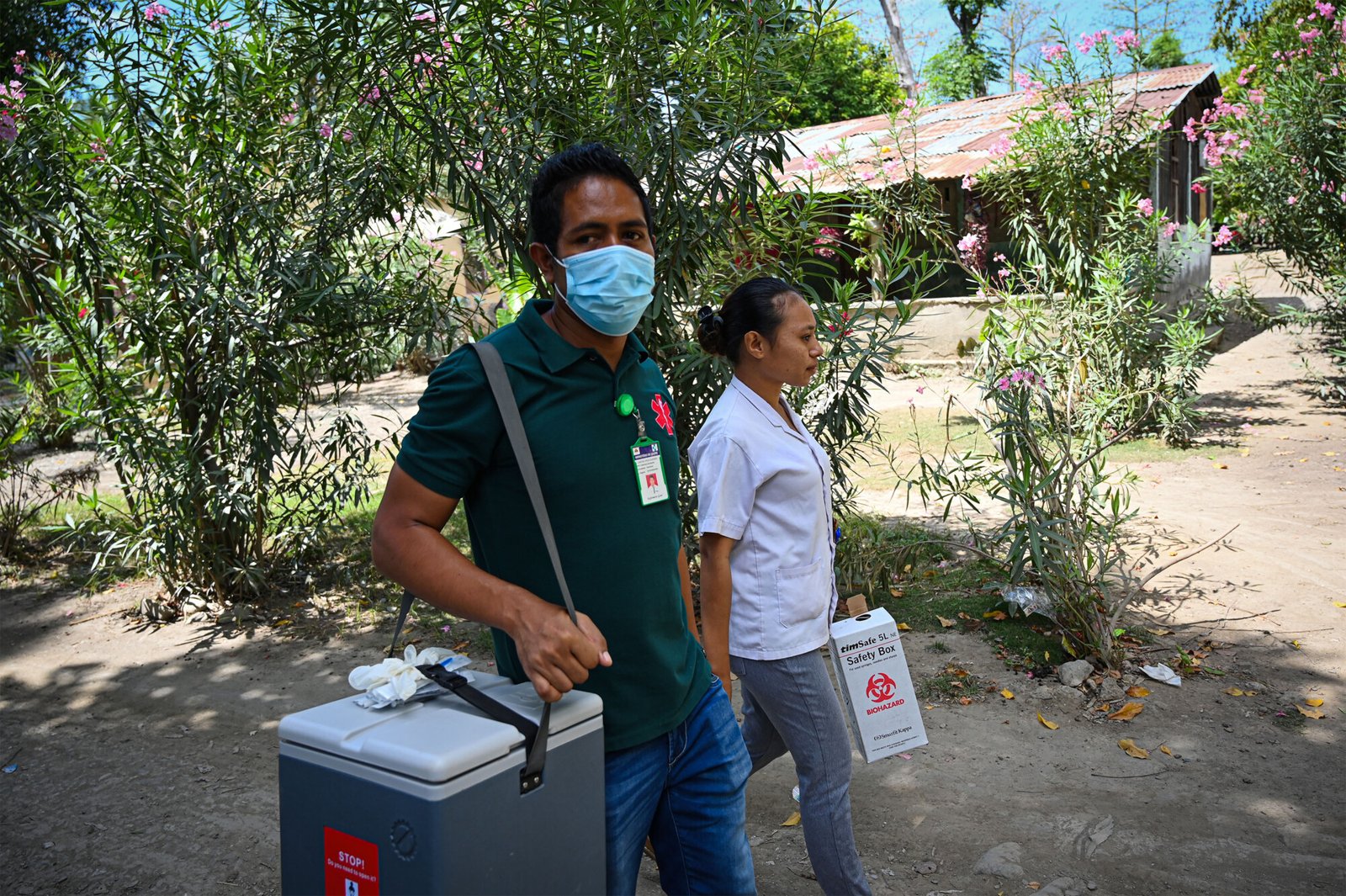
Altogether, the WHO’s regional efforts have translated to great strides towards eliminating the scourge of NTDs in Southeast Asia. Recent cross-border programs between Indonesia and Timor-Leste, which was newly inducted as the eleventh ASEAN Member State, underscore how cooperation serves as the cornerstone for the control of infectious diseases, especially in a vulnerable region like Southeast Asia.
While the Pandemic Agreement is predominantly focused on preventing the next global pandemic, its promotion of resource-sharing may translate into regional benefits in controlling tropical disease outbreaks. The interplay between the 2021-2030 NTD Road Map with the Pandemic Agreement promises enhanced benefits as ASEAN begins to roll out its implementation of the Pandemic Agreement in parallel to existing NTD control measures. However, the question remains how effectively the band of Southeast Asian countries can unite towards the common goal of disease prevention.
Agreement in name and aspiration
Despite historical support, an established framework and clear necessity for collaboration in the control of infectious diseases, trust remains the centre of this issue. The Pandemic Agreement asks countries to share virus samples, research, and production capacity during crises, but many governments are hesitant. In 2007, Indonesia chose not to share H5N1 bird flu samples with the WHO after learning that foreign companies used them to make vaccines Indonesians could not afford. Indonesia’s decision was a call for fairness, not rebellion. This led to the idea of viral sovereignty, where countries believe they own their biological resources and should get fair benefits when shared. It also showed that, without trust and quid pro quo, global health cooperation will suffer.
ASEAN’s approach to governance makes things more complicated. The group relies on consensus and non-interference, which helps keep harmony among its diverse members while still encouraging cooperation. Unlike the European Union, ASEAN lacks a regional public health authority to coordinate responses. Its Vaccine Security and Self-Reliance Plan, launched in 2019, is based on voluntary participation rather than strict rules. This approach protects each country’s independence but can slow down and limit progress. In this model, progress depends more on goodwill than on enforcement.
The COVID-19 pandemic highlighted this tension. Singapore and Malaysia got vaccine deals early, while Cambodia and Laos had to rely on COVAX donations. Solidarity was talked about, but countries acted in their own interests. When resources are limited, even countries with good intentions focus on themselves. The key lesson is that equity must offer real, shared benefits and not rely solely on moral arguments. For the Pandemic Agreement to work, it should treat sovereignty as a foundation, not an obstacle. Laws by themselves will not make countries share, hence there needs to be incentives that make cooperation worthwhile. Countries that share pathogen data or biological materials should get priority access to the vaccines or treatments that result. This way, transparency becomes a fair exchange instead of a one-sided responsibility.
Regional manufacturing networks can help support this idea. Facilities like Indonesia’s Bio Farma and Singapore’s Hilleman Labs already provide regional capacity. A system in which these facilities remain under national ownership but work together during emergencies could protect sovereignty and build shared strength. If each country maintains control while agreeing to help others, ASEAN can show that independence and working together can go hand in hand. Working together on regulations can also help achieve equity faster. If ASEAN countries accept each other’s vaccine approvals, they can distribute vaccines more quickly without needing a central authority. Having a shared regional stockpile of medicines and protective gear, paid for together but managed by each country, can provide security while respecting national control. These methods align well with ASEAN’s practical, consensus-based approach.
In the end, trust is fundamental to pandemic preparedness. Countries will work together only if they feel the system is fair and yields real benefits. COVID-19 proved that even the best legal systems can fail if trust is lost. The success of the Pandemic Agreement depends on whether countries view it as a fair deal that values their efforts and protects everyone equally. ASEAN has a special chance to lead this change. Its long history of peaceful cooperation among different members shows that diversity can be a strength where there is respect. By adopting a cooperative approach in the Pandemic Agreement, ASEAN can demonstrate how regional trust can promote global health equity.
Authors
Bastedo Kathryn Lois, Ng Jun Kai, Li Liangxin , Josya Reddy Muthukuru.
Image Credits
https://www.who.int/timorleste/news/detail/14-09-2022-in-timor-leste-an-integrated-campaign-aims-to-pull-up-routine-immunization-and-covid-19-vaccinations
Note – This article was published late due to the university calendar.