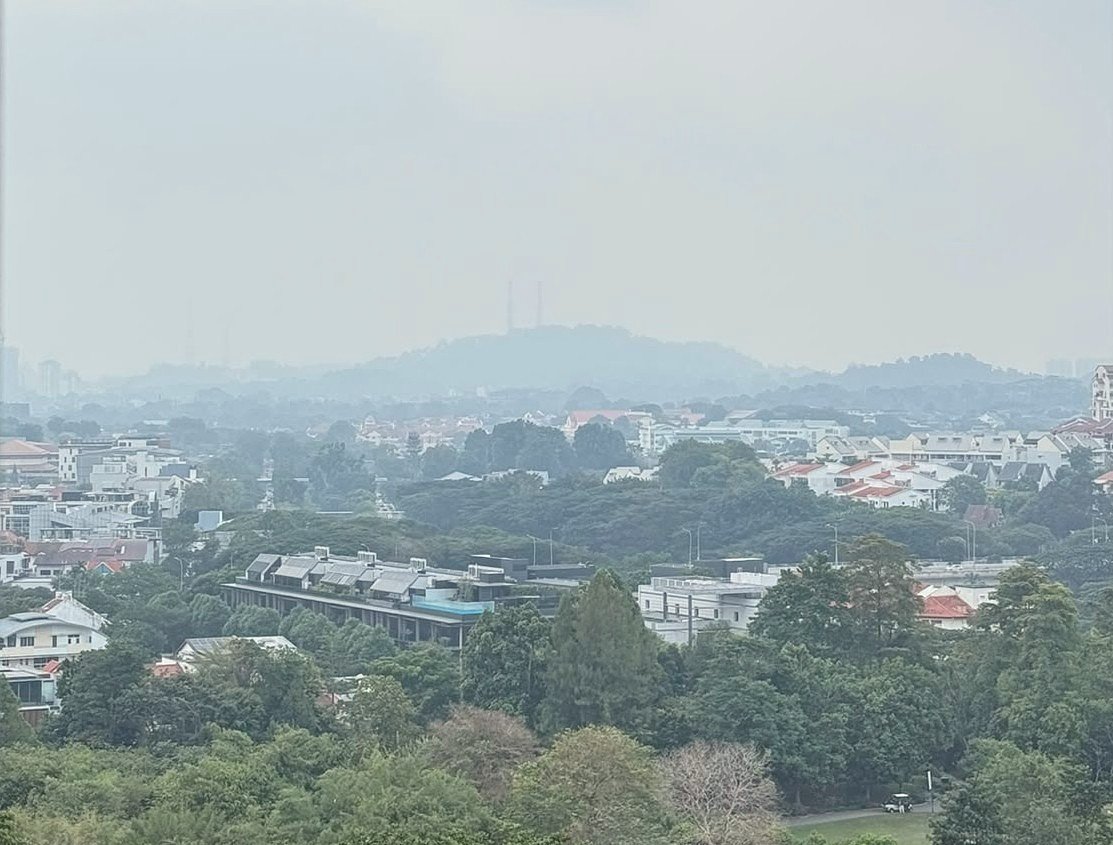
Raging wildfires burning over 300,000 hectares of forests/peatland in Indonesia’s Kalimantan, Sumatra, and South Papua have created a blanket fog of haze spreading across Southeast Asia. The haze, exacerbated by the anticipated super El Niño, has already crossed into neighbouring ASEAN countries Brunei Darussalam, Malaysia, the Philippines, and Singapore, with the possibility of even reaching the southern regions of Thailand, Cambodia and Vietnam if the situation worsens.
Haze has unfortunately become a matter of routine for Southeast Asia. Its recurrence exposes ASEAN’s ineffective response over the years, rooted in isolated, episodic reactions to each haze crisis. This article argues that the path forward must be rooted in rules-based cooperation among ASEAN member states from its existing legal instruments. There is no single perfect solution to address transboundary haze effectively—an issue that bears national, transnational, and international/ regional consequences. Instead, ASEAN needs to adopt a multi-pronged approach with short-, medium-, and long-term responses to holistically and thoroughly address haze, all of which rest on ASEAN legal frameworks and obligations:
- First, in the short term and as argued by Professor Koh Kheng Lian in 2015, the effects of the haze must immediately be addressed under the 2005 ASEAN Agreement on Disaster Management and Emergency Response (AADMER).
- Second, in the short term, ASEAN member states should use/adopt legislation to hold domestic actors responsible for transnational involvement in haze.
- Lastly, in the long-term, the 2002 ASEAN Agreement on Transboundary Haze Pollution (AATHP) should be reassessed to improve implementation.
Together, these responses reinforce ASEAN’s commitment to a rules-based and cooperative response to a transboundary crisis, bringing the region closer to resolving an otherwise perennial problem.
Short-Term: ASEAN Should Apply the AADMER Framework
Standalone efforts in Indonesia have not been able to fully resolve the haze crisis. Seeking transnational cooperation under AADMER would allow for joint emergency responses, wherein assistance can be requested or offered directly, subject to the consent and control of the Requesting State (Article 11). Nevertheless, AADMER can only apply if haze is considered a disaster.
The current haze crisis, intensified by El Niño conditions, arguably amounts to a disaster under AADMER, which defines “disaster” as “a serious disruption of the functioning of a community or a society causing widespread human, material, economic or environmental losses”. To use a numerical determinant, the ASEAN Coordinating Centre for Humanitarian Assistance on Disaster Management (AHA Centre) logs an event as a disaster in its database if more than 100 people in a sub-district are affected. This database includes also “wildfires” as a specific category of disasters, which the 2016-2020 AADMER Work Programme acknowledged as coming within the scope of disaster management.
By these parameters, serious cases of transboundary haze can be categorised as a disaster. The current crisis is producing measurably worse impact compared to previous bouts: air quality index readings are at hazardous levels, haze-related respiratory illnesses have spiked (see here, here, and here); the Centre of Economic and Law Studies estimates a total IDR123.1 trillion for economic and health costs; and there is extensive destruction of Indonesia’s forests and native wildlife.
Current disaster management instruments suggest that haze and disaster management responses are more likely to coalesce in the future rather than remain siloed under separate agreements. The 2016 ASEAN Vision 2025 on Disaster Management contemplated including “human-induced disasters” such as transboundary haze pollution; the 2021-2025 AADMER Work Programme envisioned “ASEAN’s transformation into a region that is resilient and adaptive to all forms of disasters [] through a multi-hazards approach” (emphasis added); the 2026-2030 AADMER Work Programme affirmed ASEAN’s ambition to be able to reduce impacts of disasters, and ability to address “transboundary” scenarios (Outcome 3.1); and the 2024 Joint Statement by the ASEAN Defence Ministers’ Meeting Plus on Resilience to Climate‑Related and Other Natural Disasters expressly recognises how “climate‑related phenomena” heighten the risk of transboundary haze, and calls for enhanced cooperation to address climate-disaster risks.
These textual efforts to link haze to general disasters are observable in practice as well. For several ASEAN member states, the same national agencies would be engaged to address both general/forest fire-related disasters and transboundary haze. Linking the two regimes will make no practical difference on first responders, whose operational roles and coordination arrangements would remain largely unchanged:
| Country | National Agency | Scope |
| Indonesia | National Agency for Disaster Countermeasure | Currently addressing the forest fires and haze, also responsible for managing other disasters |
| Malaysia | National Disaster Management Agency | Manages forest fires and haze, and natural disasters |
| Philippines | National Disaster Risk Reduction and Management Council | Manages disasters and emergencies, monitors and reports on haze. |
| Thailand | Department of Disaster Prevention and Mitigation | Manages haze and natural disaster prevention, mitigation |
Further, in 2018, the ASEAN-Emergency Response and Assessment Team (ERAT) was deployed to assist in fire and haze control in Yangon. A similar deployment in Indonesia is both legally sound, and ideal.
Applying AADMER to the present conflict presents two main benefits.
Firstly, AADMER reduces political frictions which impede implementation. AADMER reframes ‘assistance’ into one of “enhanced cooperation” instead of a derogation of state sovereignty, wherein major disasters are perceived as needing a “whole-of-ASEAN” response and must involve other member states. Thus, Indonesia, who accepted assistance under AADMER for the 2004 Indian Ocean tsunami, is encouraged to accept external involvement.
Secondly, with the AHA Centre as a coordinating hub, AADMER mobilises relief efforts from institutions including the ASEAN-ERAT and Disaster Emergency Logistics System for ASEAN, while working closely with civil Humanitarian Assistance and Disaster Relief efforts. Thus, AADMER provides a faster and coordinated response to the haze problem, mobilising relief efforts more efficiently, with fewer political barriers.
Medium: Domestic Legal Enforcement Against Haze Producers
Article 9 of the AATHP imposes a broad obligation for parties to “prevent and control activities related to land and/or forest fires”. Following this ethos, in the short-term, ASEAN member states should investigate and pursue legal enforcement action under each country’s national laws against domestic entities with a stake in haze-producing land clearing activities. Transboundary haze is primarily caused by human activity—namely palm oil concessions and resulting peatland conversion through arson. More than 100 individuals in Indonesia have already been arrested in relation to the fires/haze but beyond, reports trace external involvement to wholly or majority-owned foreign entities—a fact that has not changed since 2013.
ASEAN countries should enact ‘airtight’ legislation against transboundary haze to ensure all local actors involved in irresponsible land clearing activities will be held accountable. Although most ASEAN member states have domestic laws addressing locally produced haze and forest fires, Singapore’s 2014 Transboundary Haze Pollution Act (THPA) is the only one that allows extra-territorial investigations—in compliance with international law—into foreign causes of transboundary haze, with punishment of fines up to S$100,000 per day that there is haze in Singapore. Under the THPA, investigations during the 2015 haze crisis revealed that Singaporean companies themselves were linked to forest fires in Indonesia. To date, only four cases remain open and are being investigated quietly or reached inconclusive dead-ends.
ForMalaysia, the current bout of transboundary haze is an invitation to reopen conversations on a similar transboundary haze pollution bill, which was revoked on the basis that it would be difficult to enforce for evidentiary reasons, and because Malaysia prefers to approach haze diplomatically with its neighbours. Greenpeace Malaysia has revived calls for the Act, which would seek to hold any Malaysian businesses/individuals accountable for overseas operations producing transboundary haze or heightening risk of wildfires.
Admittedly, domestic progress will continue to rest on whether Indonesia wishes to cooperate with investigations, or if it sees such investigations as encroachment on its sovereignty. Two legal considerations may encourage compliance. The first is whether the ASEAN will finally see full operation of the ASEAN Coordinating Centre for Transboundary Haze Pollution Control (ACC THP), which currently only has one ratification for its Establishment Agreement. Based in Indonesia, the ACC THP is primed to provide much-needed information to other ASEAN member states to substantiate enforcement proceedings. More ASEAN member states, especially those severely affected by this current bout of haze, should use this event’s momentum to lobby for the Establishment Agreement to be ratified. Secondly, the recently concluded ASEAN Extradition Treaty may prove helpful in mobilising assistance/enforcement. Should the Treaty enter into force, ASEAN members have an additional legal basis to request for Indonesia’s cooperation or prosecution of haze-causing actors within its jurisdiction.
Long: Much-Needed AATHP Reform
Lastly, ASEAN should consider AATHP reform as an international solution to the recurrent harms experienced in the region caused by transboundary haze. In its current form, the AATHP only creates a duty for member states to prevent, monitor, report on, and (rather ambiguously) respond to transboundary haze. By design, the Agreement prioritises the principle of non-interference (see Articles 1(14), 3(2), 9, 12), and has been described as toothless. Article 27, which covers dispute settlement, only provides for consultation and negotiation; there are no provisions under the AATHP on liability, penalties, or damages, presenting issues with enforcement by shifting the burden to prosecute transboundary harm to national law. The Agreement’s relevance to recurrent transboundary haze is waning; simply reporting on haze without further ameliorative action is no longer enough.
Malaysia has requested for the AATHP to be reviewed. Reform ideas from academics, activists, and ASEAN’s own roadmaps include calls for the AATHP to adopt a more structured compliance monitoring framework, provide binding disclosure for concession maps, operationalise Article 17 by establishing a panel to review technical data and research pertaining to haze pollution, and enhance cross-sectoral and regional cooperation in environmental protection—especially in terms of integrating technology with haze and forest fire governance. Importantly, such reforms should be framed as complementary to strengthening the AATHP’s implementation to address haze as a regional issue that affects all of ASEAN, including Indonesia. At the same time, ASEAN must reckon with the need to keep the AATHP resilient by adapting it to meet contemporary transboundary environmental challenges.
Article 22 already contemplates the possibility of amendments to the Agreement. A long-term solution to transboundary haze will require ASEAN to consider regional cooperation with stronger enforcement capabilities. Having a more robust haze agreement allows ASEAN to meet challenges of a continuously adapting and complex transboundary issue through careful and incremental legal development.
Conclusion
For fresh air, ASEAN needs a fresh mindset. The region’s ambition to be haze-free by 2030 requires sustained negotiation for AATHP reform in the long-term, meaningful domestic enforcement in the medium-term, and rapid response to provide aid to populations most affected by the haze crisis in the short-term. A well-rounded response would reflect ASEAN’s growth as a regional organisation, and increased appetite for rules-based cooperation in addressing complex transboundary issues.
About the Author
Yvette Foo (LLM, LLB) is a Research Associate under the ASEAN Law and Policy team at the Centre for International Law, National University of Singapore.
Image Credit
Photo provided by Ahmad Fauzi Bin Jantan