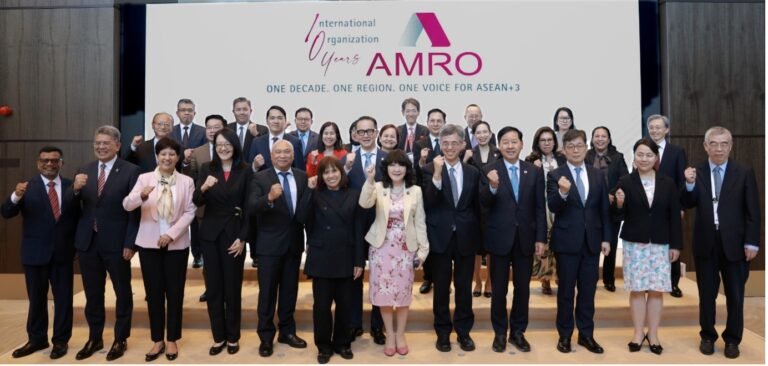
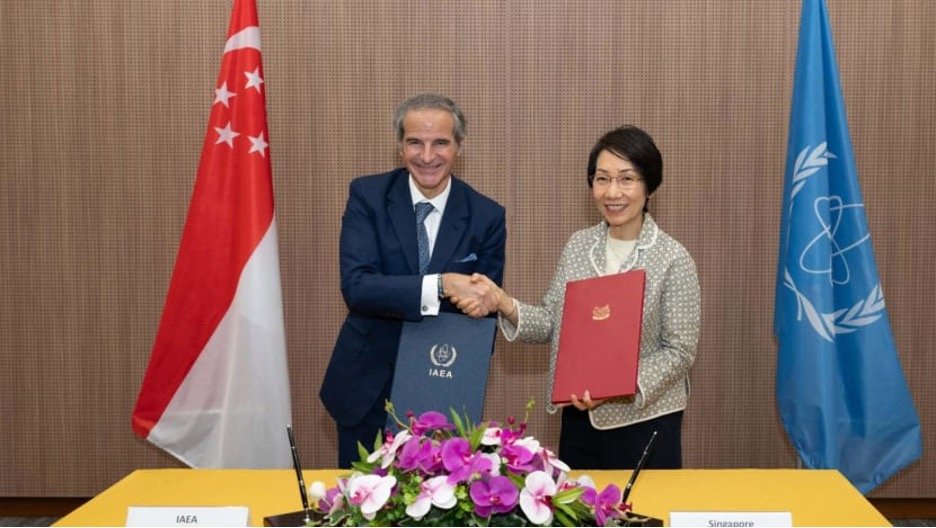
On July 25, 2025, Singapore renewed its agreement with the United Nations’ International Atomic Energy Agency (“IAEA”) to help train developing nations on nuclear research. The deal, known as the Third Country Training Programme, was signed by Singapore’s Minister for Sustainability and the Environment (“MSE”), Grace Fu, and IAEA Director General, Rafael Mariano Grossi. The agreement will focus on “human health, industrial radiography, environmental radiography monitoring and analysis, and accelerator science,” and will not cover military or defence-related uses of nuclear technology.
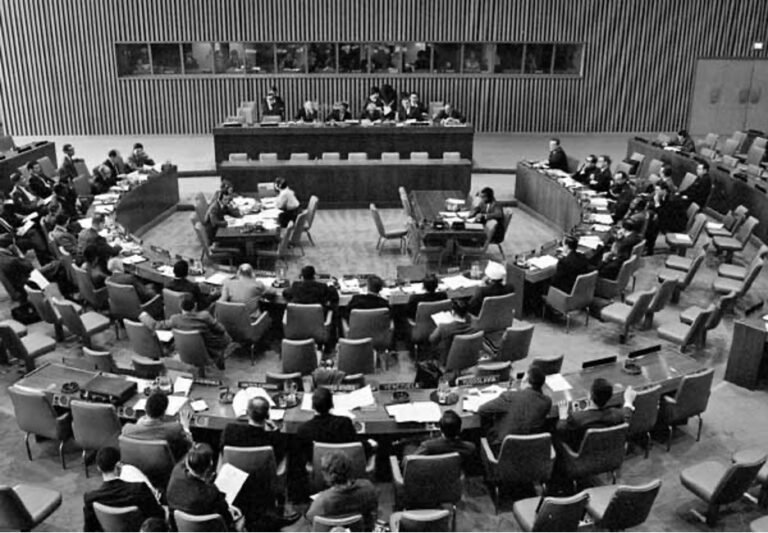
The IAEA is an international atomic energy agency that works with member states to promote safe, secure and peaceful use of nuclear technologies. Established in 1957 following the U.S. Ratification of its namesake statute by President Eisenhower, the IAEA emerged in response to global fear and perceptions of nuclear technology. It was set up under the UN’s aegis and reports to both the UN General Assembly and the UN Security Council. As of now, the organisation has over 180 member states, with all ASEAN countries being IAEA Member States.
Singapore first signed an agreement with the IAEA in 2000 and renewed it in 2015. The nation has since collaborated with over 140 participants from 27 countries to enhance nuclear expertise. As the host country in this most recent agreement, MSE is hopeful that Singapore participants may enjoy enhanced access to the IAEA’s resources and its international network of experts.
Although there are no operational nuclear reactors in the region as of now; there is growing interest among ASEAN states in exploring nuclear power as a future source of clean energy. During his visit, Mr. Grossi noted that, “[T]he reality is that all the ASEAN governments are approaching the agency and telling me that they want nuclear energy … so there is a lot of interest in the area.”
This raises the question of whether ASEAN countries are geographically and socio-politically situated to manage such a development.
Some of the factors the IAEA considers when advising countries on their suitability of constructing nuclear plants include geographical situation, access to water, political stability, financial resources, human capacity, and workforce. However, regardless of IAEA input, it is ultimately up to individual ASEAN nation on whether they want to engage in a nuclear programme.
The Need for Nuclear Energy in ASEAN
Nuclear energy is a form of energy that is released when the nucleus of an atom splits into two or more smaller nuclei. Although somewhat debatable, nuclear energy is considered a clean energy source as it produces no greenhouse gas emissions during operation.
Nuclear energy is an attractive solution to Southeast Asia’s overarching paradox of fuelling economic growth and national decarbonization. The rapid growth of energy-intensive industries like data centers and electric vehicles manufacturing has driven demand for energy in the region, and the overall demand for power is projected to triple by 2050. It is currently reliant on fossil fuels to generate 80% of its energy.
While renewable energies are a possible solution, countries may not have resources for solar or offshore wind, which is exacerbated by “geopolitical obstacles fuelling volatile pricing” of imports. China’s export curbs are expected to “undermine the crucial production of wind turbines and solar panels”. Nuclear energy is much more efficient as a source of green energy, requiring “17 times less material and 46 times less land” than resource-intensive renewable energies. It is a much more “scalable solution” to achieve energy security and carbon neutrality.
ASEAN has a target of 22 GW nuclear capacity by 2040 to meet a projected energy demand increase from “1.5 trillion to 2.3 trillion tonnes of oil equivalent”.The Philippines and Indonesia currently have the most advanced nuclear power development plans and have set targets to operate nuclear power plants by early 2030. Malaysia, Thailand and Singapore are studying the potential of nuclear power, through small modular reactors (SMRs).
The development of SMRs is a key innovative solution as they are only a “fraction of the size of a conventional nuclear reactor”, and thus suitable for countries with territorial and geographical constraints like Singapore. Despite this, the Singaporean government has confirmed that “no decision has been made on whether to adopt nuclear energy”.
Challenges Faced by ASEAN in Adopting Nuclear Energy
Collaboration between ASEAN member states to achieve the targeted nuclear capacity might prove to be challenging. The organisation’s emphasis on consensus and non-interference could hinder progress toward adopting nuclear technology and decarbonisation.
As there is no clearly defined, binding legal commitment between member states, the implementation of nuclear technology is left to the political will of individual member states. Their decision will ultimately hinge on their respective energy needs, safety and security considerations, carbon emission calculations and commitment to follow IAEA stipulations. Member states also have different practical considerations due to varying national energy plans, unequal infrastructure development, and their ability to mobilise financing for massive infrastructure projects.
The highly-sensitive topic of nuclear waste management would make it even harder to reach a regional consensus and may significantly delay the project. Radioactive waste, such as spent nuclear fuel, is “one of the most politically sensitive and technically demanding aspects of nuclear energy deployment”. No ASEAN state has a repository for permanent waste storage at the time of writing, and every temporary storage is contentious due to “potential transboundary risks”.
The risk of negative public perception may also impinge on political will. Well-known events like Chernobyl (1986) and Fukushima (2011) coupled with dramatic portrayals in popular media have propagated long-standing skepticism and fear toward such technology. Apprehensions about reactor safety and radiation risks remain, and there is generally a lack of public support in the region. Without such support, nuclear projects cannot proceed even if the political will and financial resources exist.
However, ASEAN countries could demonstrate that they have learnt from past events through enhanced safety precautionary measures. Learning from Fukushima, Philippine’s PhilATOM bill attempts to address the safety and environmental concerns by ensuring compliance with international safety standards set by the IAEA.
Further, public concern about nuclear technology being weaponized can be put to rest as the region has “resilient norms against nuclear weapons”, as seen by the Southeast Asian Nuclear-Weapon-Free Zone Treaty (SEANWFZ) and Treaty on Prohibition of Nuclear Weapons.
Looking to the Future: Developments in International Nuclear Law
Mr. Grossi’s visit on July 25, 2025, represents a key milestone in the advancement of nuclear energy in ASEAN, as it highlights the IAEA’s continued support for the region’s readiness to enter the nuclear energy era. However, as ASEAN looks to the future, the central question remains how its member states can overcome the aforementioned challenges associated with nuclear development and ensure the region’s sustainable success in this field.
Suggestions from the Southeast Asia Public Policy Institute include investing in human capital through education and training, prioritizing public engagement and transparency on nuclear plans, and strengthening emergency preparedness and nuclear security to minimize risks.
However, ASEAN’s greatest resource to support the safe and effective deployment of nuclear energy may lie in its tradition of regional cooperation. This can be harnessed through the establishment of regulatory frameworks that guide nuclear governance and safety.
Institutions such as the ASEAN Network of Regulatory Bodies on Atomic Energy (“ASEANTOM”) and the Nuclear Energy Cooperation Sub-Sector Network (“NEC-SSN”) already play central roles in nuclear development within the region; however, it may be necessary to continue building upon these frameworks. To accomplish this, ASEAN can learn from other successful international nuclear partnerships, such as the Krško Nuclear Power Plant jointly operated by Slovenia and Croatia. This bilateral partnership demonstrates how two relatively small nations can collaborate effectively by locating a nuclear facility in one country but equally splitting the energy between both.
By adopting similar principles and building upon their own legal frameworks, ASEAN nations have a greater chance at developing nuclear energy that achieves energy targets, while being safe and sustainable for future generations to come.
Authors
Rachel Ho Yixin (NUS law student), Leanne Hirabayashi (NUS law exchange student), Erin Elizabeth Hahn (NUS Law exchange student), Dean Seow (NUS Law student)
Image source